


SHARE THIS POST:
India’s automotive exports are hitting the accelerator, with a powerful 14% growth in the first half of FY25. The Automotive Sector is a major force on the global stage, but the real prize lies ahead: dominating the high-value, precision-engineered segments like engines and transmission systems, where India’s market share is currently a modest 2-4%.
To win this race, there is a need of more than just a manufacturing muscle, a reputation for unshakeable quality.

In today’s global market, quality is not just a feature- it’s the foundation of trust. Poor quality results in costly remembers, regulatory nightmares and shattered consumer confidence.
So, how can manufacturers produce world -class products while managing costs and complexity?
The answer lies in transferring a quality from an afterthought to the very core of the operations. This is where Product Life Cycle Management (PLM) becomes the playing strategy.
What is Quality Management in PLM?
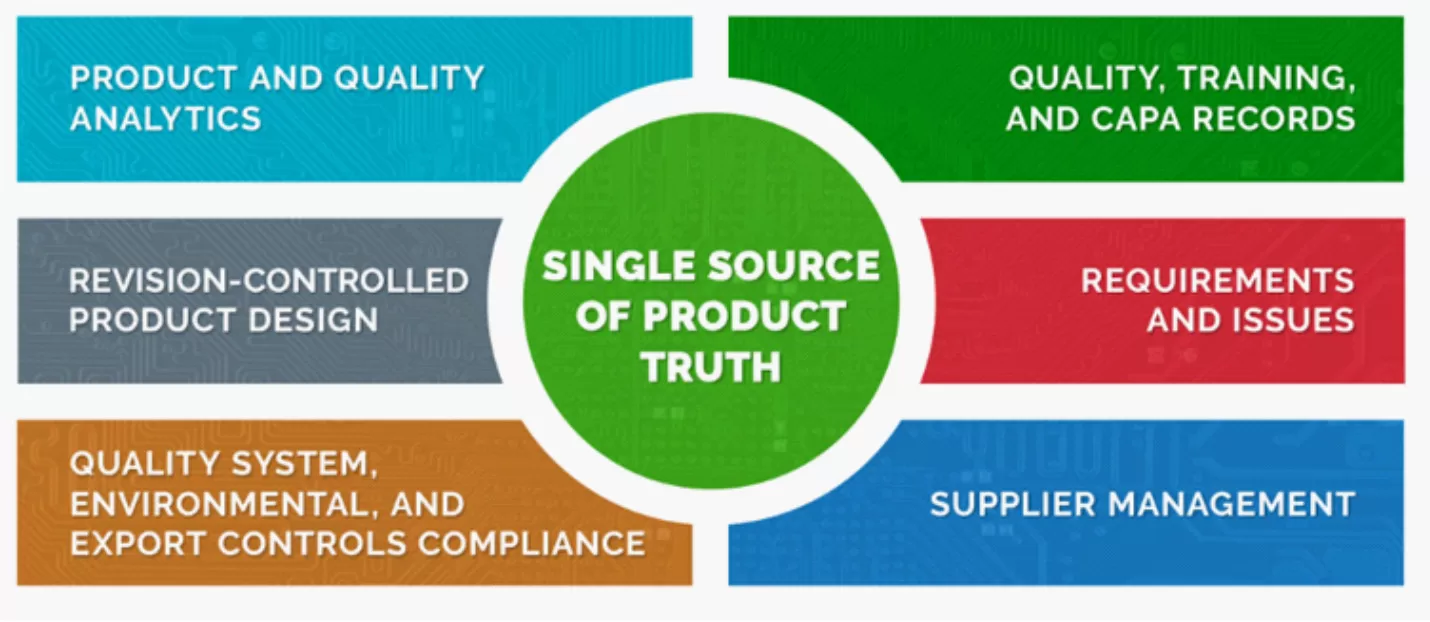
Quality Management in PLM is designed to control, support, and continuously improve the quality processes in a single source of truth. This connected system controls and tracks the quality information in context to the entire product record consisting of parts, bills of materials (BOMs), drawings, and documents. Quality Management in PLM refers to the integration of quality processes—such as audits, inspections, CAPAs (Corrective and Preventive Actions), and compliance tracking—within the PLM system. It ensures that quality is not an afterthought but a continuous, proactive process.
Improved Product Quality
This is what a truly connected quality ecosystem looks like. Information doesn’t just flow out from engineering; critical data on performance, failures, and customer feedback flows back, creating a powerful cycle of continuous improvement.

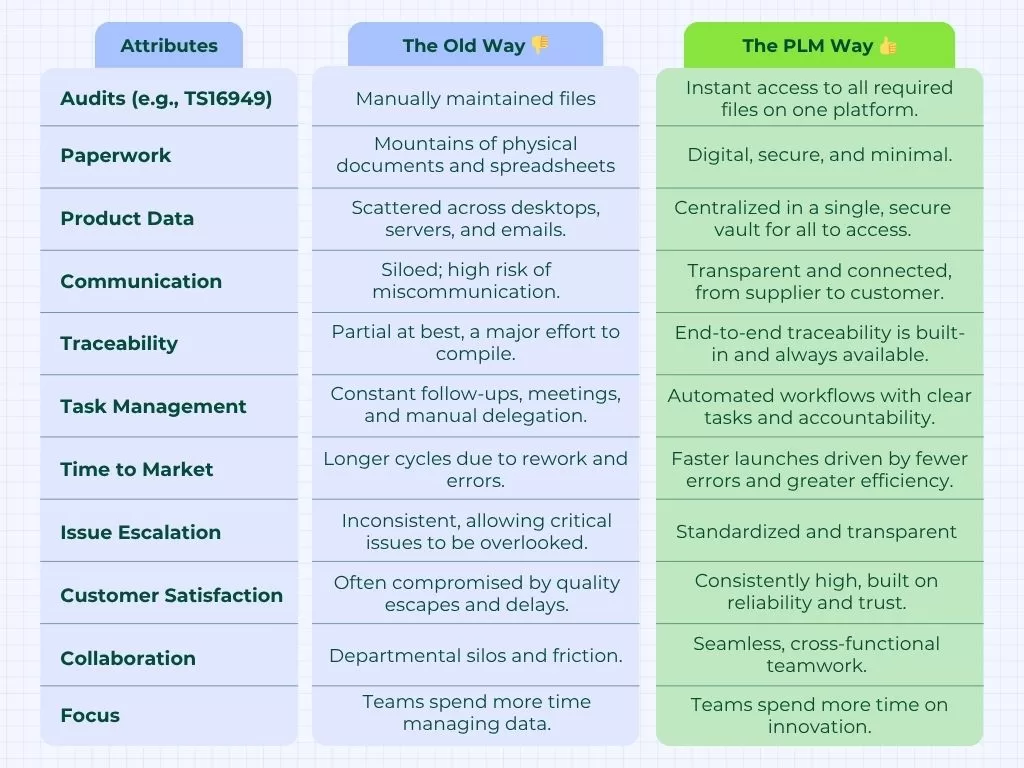
Difference: PLM vs traditional ways
The impact is not just theoretical. Here is side by side comparison how daily operations are converted:
Quality in Action: Real-World PLM Success
This is not just for one industry. Top performers across sectors are leveraging PLM for quality excellence:
- Automotive: Effortlessly managing complex processes like APQP (Advanced Product Quality Planning) and PPAP (Production Part Approval Process) to meet strict automaker standards.
- Medical Devices: Secure Ironclad FDA relationship with integrated unit -historical items (DHR) and quality documentation.
- Aerospace: Generating important fair (first article inspection report) and adhering the strict AS9100 standards for safety and quality.
Conclusion: Build the quality culture on a PLM foundation
Quality is not just a department – it is a culture.
By embedding quality management directly into the PLM system, industries can stop chasing defects and start building excellence into every product, every process, and every decision. It is a strategic step that transforms the organization to proactive, operates innovation, ensures compliance and serves a unbreakable customer self assurance.
Don’t lose your next export contract to a competitor who can prove their quality with a single click.
→ Ready to transform? Talk to ScaleB.

About Satyajeet Kale
With over 20 years of experience in the automotive industry, particularly in quality functions, Satyajeet has developed deep expertise in quality management, supplier management, and customer quality. Currently serving as a Business Analyst at SteepGraph Systems, he focuses on enhancing PLM solutions. As an industry expert, he leverages extensive experience to integrate best practices, regulatory requirements, and systems into PLM—ensuring compliance with ISO 9001, IATF 16949, and AS9100D standards across the manufacturing, automotive, and aerospace sectors.