
SHARE THIS POST:
For manufacturing SMBs in India, choosing between PLM vs ERP is no longer just an IT decision – it’s a product strategy decision. While ERP systems help manage operations, they fall short when it comes to managing product development, engineering changes, and lifecycle complexity. This is why more manufacturing SMBs in 2026 are turning to PLM as the backbone of product innovation.
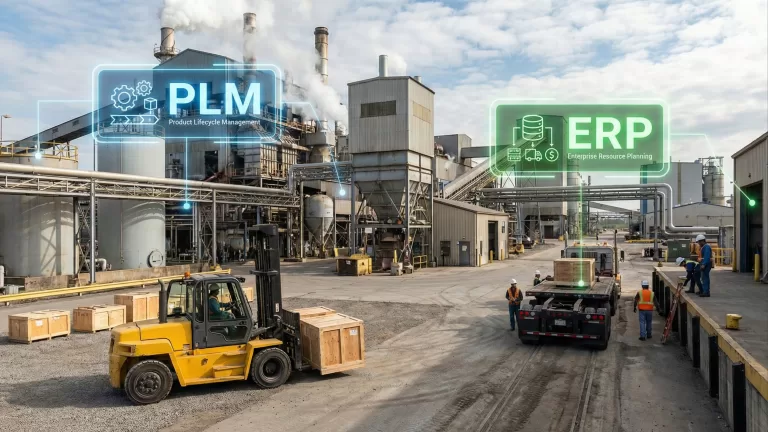
This is where the conversation around PLM vs ERP becomes critical. While ERP systems have helped Indian SMBs streamline transactions and execution, they were never designed to manage the growing complexity of modern products. PLM, on the other hand, directly addresses this gap – making it a far more strategic system for manufacturers focused on growth in 2026 and beyond.
India’s Digital Progress Highlights a Product Development Gap
India’s manufacturing sector is clearly moving in a digital-first direction. According to CyberMedia Research, nearly 67% of Indian MSMEs have adopted digital tools, including ERP, CRM, and cloud platforms. However, only 43% report proficiency in these basic systems, and just 23% have begun using advanced technologies like analytics, AI, or IoT.
What stands out is not the adoption of ERP – but the absence of structured product lifecycle management. While many SMBs digitally track finance, inventory, and procurement, very few digitally manage product definitions, engineering changes, revisions, BOM evolution, or compliance. This disconnect creates a silent bottleneck: products are being developed using spreadsheets, emails, and disconnected CAD files, even while operations run on ERP.
This gap is precisely where PLM becomes essential, not optional.
PLM vs ERP for Manufacturing SMBs: What’s the Real Difference?
For manufacturing SMBs, the difference between PLM and ERP lies in what they control. ERP controls transactions after a product is defined, while PLM controls the product definition itself – including design data, revisions, BOMs, and engineering changes. This distinction is critical because product development is rarely stable. Designs evolve; variants increase, and engineering intent changes frequently – conditions that PLM is built to handle from the start.
In growing manufacturing environments, control over product definition matters far more than control over transactions.
ERP Was Never Built for Product Development
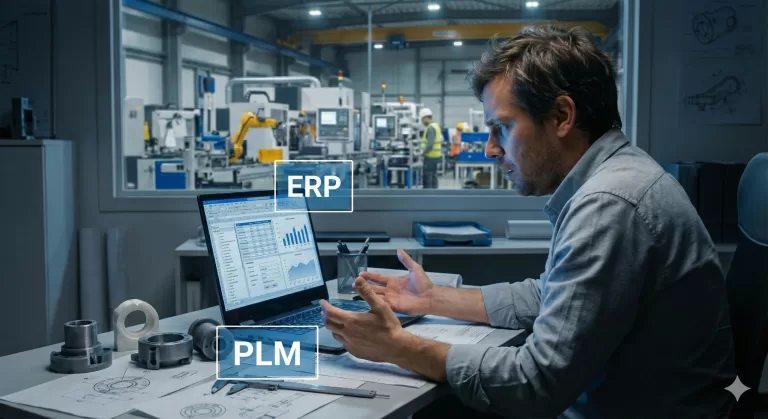
This is where the PLM vs ERP for manufacturing SMBs discussion becomes critical, because ERP systems were never designed to manage frequent design iterations, engineering changes, or evolving product definitions.
ERP systems excel at managing transactions once a product is already defined. They assume stability – stable BOMs, stable routings, stable part numbers. But modern manufacturing rarely operates under those conditions. Product designs evolve, customer requirements change, variants multiply, and engineering changes become frequent.
ERP struggles in these environments because it lacks native capabilities to manage engineering intent, design iterations, technical changes, and cross-functional collaboration. As a result, Indian SMBs often face revision mismatches, outdated drawings reaching production, delayed change approvals, and limited traceability when quality issues arise.
These challenges are not implementation failures. They are structural limitations of ERP.
Why PLM Is the System That Actually Manages Products

PLM is designed specifically to manage the entire product lifecycle, from concept to production and beyond. It acts as the single source of truth for all product-related information, design data, engineering changes, BOMs, documentation, compliance records, and collaboration with suppliers.
For Indian SMBs, PLM provides control where chaos often exists. Engineering teams gain visibility into revisions and approvals. Manufacturing teams always work with the latest released data. Quality teams achieve traceability without the need for manual audits. Management gains confidence that products are being built consistently, not improvised at the shop-floor level.
Unlike ERP, PLM thrives in environments of change. It is built to manage complexity, not avoid it.
Digital Manufacturing Maturity Demands PLM
Industry data reinforces this shift. Reports from ETManufacturing and The Indian Express show that Indian SMBs are actively investing in cloud platforms, digital workflows, and data – driven systems. Nearly 42% of manufacturing SMEs are prioritizing cloud expansion, and close to 35% report significant cost reductions after digital adoption.
However, cost savings plateau when digitalization stops at ERP. Real gains – faster launches, fewer quality issues, better supplier alignment – come only when product data and engineering workflows are digitized through PLM.
In short, ERP digitizes execution. PLM digitizes innovation.
PLM and ERP: The Right Relationship
This is not about replacing ERP. It is about recognizing that ERP depends on PLM for accurate product information. Without PLM, ERP operates on incomplete or outdated data. With PLM in place, ERP becomes significantly more effective because it receives validated, approved, and traceable product definitions.
When PLM leads and ERP follows, manufacturers achieve a seamless digital thread – from engineering to production to delivery. Errors reduce, rework drops, and decision – making improves across departments.
The mistake many SMBs make is treating ERP as the system of record for products. PLM should hold that responsibility.
Why Indian SMBs Should Prioritize PLM Now

By 2026, Indian manufacturing faces stricter compliance norms, higher customer expectations, and global competition that rewards speed and consistency. SMBs can no longer rely on informal processes to manage product complexity.
For growing manufacturers, the PLM vs ERP for manufacturing SMBs decision is no longer about software preference – it is about gaining long-term control over product development as complexity, variants, and compliance demands increase.
What they need are modern, scalable PLM platforms that are affordable, quick to deploy, and aligned with SMB realities – not heavyweight enterprise systems built for Fortune 500 companies.

Where ScaleB Comes In
Powered by Aras Innovator, ScaleB gives Indian SMBs enterprise – grade PLM capabilities without enterprise – level cost or complexity. It centralizes product data, manages engineering changes, automates approvals, ensures traceability, and integrates seamlessly with existing ERP systems.
By putting PLM at the center of product development, ScaleB enables SMBs to reduce rework, accelerate launches, and maintain quality as they scale.
ERP alone cannot deliver these outcomes. PLM makes them possible.
Final Perspective: PLM Is the Strategic Backbone
This is why the PLM vs ERP for manufacturing SMBs debate is increasingly leaning toward PLM as the system that drives sustainable product innovation, faster launches, and global competitiveness.
For manufacturing SMBs, PLM vs ERP is not a competition – it’s a hierarchy. ERP supports execution, but PLM defines the product. SMBs that prioritize PLM in 2025 gain better control over product development, faster launches, and higher quality – without disrupting their existing ERP systems.